Human-wildlife conflict linked to migration and falling farm income
Monkeys and wild boars cause major crop damage in Uttarakhand, report highlights rising rural distress
- By Gurmehar --
- Monday, 04 May, 2026
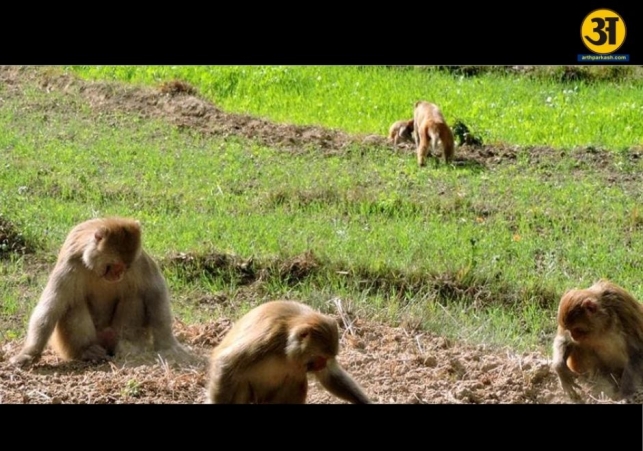
A recent report has revealed that monkeys and wild boars are responsible for nearly 60% of the total crop damage caused by wild animals in Uttarakhand. The findings have raised serious concerns about the growing conflict between humans and wildlife, especially in rural areas where farming is a primary source of income.
The report was prepared by the State Migration Prevention Commission, which studies the reasons behind people leaving villages and moving to cities. According to the report, crop damage by wild animals is becoming a major factor behind migration from rural areas.
It states that monkeys alone account for about 36.7% of crop damage, while wild boars contribute 22.9%. Together, they form the biggest threat to farming in the state.
Other animals also play a role, though to a lesser extent. Stray animals cause around 11% of the damage, followed by langurs at 9.3%, nilgai at 5.7%, porcupines at 3.5%, bears at 2.2%, and elephants at 1.5%. Some other unidentified animals make up the remaining share.
The problem is not limited to one region. However, the report notes that monkeys, wild boars and langurs mainly affect hilly districts, while animals like nilgai and elephants are more common in the plains.
Impact on farmers and rural livelihoods
The increasing damage to crops is directly affecting farmers’ income and daily lives. Many farmers depend on agriculture for survival, and repeated losses make it difficult for them to continue farming.
According to the report, crop damage is one of the reasons behind migration from villages, contributing to about 5.61% of all migration cases in the state. While this may seem like a small number, it has a strong impact when combined with other challenges such as lack of jobs and poor infrastructure.
Some districts are more affected than others. Almora has reported the highest migration linked to crop damage at 10.99%. Other districts like Champawat, Nainital, Pauri Garhwal and Rudraprayag also show significant impact. In contrast, plains districts like Haridwar and Dehradun have reported lower figures.
However, even within districts like Dehradun and Nainital, the hilly areas see more migration than the plains. This shows that the problem is more serious in remote and mountainous regions.
The damage caused by wild animals goes beyond just crops. Farmers also face losses in livestock due to attacks by animals like tigers, leopards and wolves. These losses add to their financial burden and create constant fear.
Over time, such repeated losses lead to stress and frustration. Many farmers feel that continuing agriculture is no longer sustainable. As a result, they move to cities in search of better opportunities, leaving their land behind.
The report also highlights that agricultural production is declining due to this issue. Crops such as wheat, maize, pulses, fruits and vegetables are regularly damaged. This not only affects farmers but also impacts overall food supply and the rural economy.
ALSO READ: Khatron Ke Khiladi 15 contestants revealed with mix of returning stars and new faces
Measures to reduce conflict and protect crops
To deal with this growing problem, farmers have been using different methods to protect their fields. In many villages, community-based efforts have been started where people take turns guarding crops day and night.
More than 2,400 villages are using such community surveillance systems. Some villages hire guards, while others organise group efforts to chase away animals. Pet dogs are also used to alert farmers about animal movement.
Physical barriers are another common method. Farmers use wire fencing, solar fencing and trenches to stop animals from entering their fields. Scarecrows, lights and sound devices are also used to keep animals away.
Some farmers use traditional methods like chilli sprays or smoke to deter animals. In certain areas, bee fencing has also been tried, as bees can help keep elephants away.
Despite these efforts, the problem continues to grow. Data from the report shows that incidents of crop damage increased from 760 in 2021 to 772 in 2023. The total area affected also rose from 283.8 hectares to 314.3 hectares.
Another worrying trend is the increase in abandoned farmland. Between 2019 and 2024, over 63,000 hectares of land were classified as barren. This shows that many farmers have stopped cultivating their land due to ongoing challenges.
The commission has suggested several solutions to address the issue. These include providing subsidies for better fencing, promoting community protection systems, and using modern technologies like surveillance and solar-powered barriers.
It has also recommended crop diversification, where farmers grow crops that are less attractive to animals. Improving irrigation and land management practices can also help farmers maintain productivity.
The report stresses the need for better coordination between forest and agriculture departments. Monitoring wildlife movement and providing timely compensation for crop losses are also important steps.
Awareness programmes for farmers can help them learn new ways to protect their crops. At the same time, long-term planning is needed to reduce human-wildlife conflict and support rural communities.
Overall, the report highlights a serious issue that affects both farmers and the environment. If not addressed in time, it could lead to more migration, loss of farmland, and weakening of the rural economy in Uttarakhand.
Related News